What will learning look like in the years ahead? Will classrooms still have four walls? Will teachers still stand at the front? Or will immersive technologies, flexible spaces, and student-led learning redefine the very concept of “school”? The Classroom of the Future stream invites educators, designers, technologists, and visionaries to explore how learning environments are evolving—and what’s next.
The classroom of the future isn’t just about gadgets—it’s about purposeful design, progressive pedagogy, and empowering learners. It’s about creating spaces and systems that reflect the world students are growing into—not the one we grew up in.
Registration to attend Classroom of the Future and co located The Education Show is free. Customise your PD and attend as many sessions as you like. All sessions are eligible for PD hours. Conference tickets include access to all Classroom of the Future sessions.










*Program subject to change

Classroom of the Future MC
Dr Matt Pitman,
Head of School (Senior),
Catholic Regional College Caroline Springs
9.15 – 9.45am
Alice Vigors, Principal, Tumut Public School

Critical and Creative Thinking: still essential in the age of AI
This session will delve into the fundamental concepts of critical and creative thinking, illuminating how these cognitive processes differ yet complement each other in problem-solving and learning. Participants will examine the importance of nurturing these skills in educational settings, particularly as AI technologies become increasingly prevalent in society and the workforce. In an age where AI can efficiently process information and automate routine tasks, the uniquely human abilities to think critically—evaluating information, questioning assumptions, making judgements—and creatively—generating novel ideas, approaches, and solutions—remain vital. The session will explore how educators can intentionally foster these ‘soft skills’ within the curriculum, using practical strategies and classroom activities.
10.00 – 10.30am
Chris Mills, Managing Director, Strategenics

Australia’s Educator-Led AI Revolution: Sovereignty, Pedagogy, and the Future of Learning
Chris introduces the RocketEducation AI Suite (TeachersRocket, LearnersRocket, SchoolsRocket, LibraryRocket) and the AI TRACK Assessment: an integrated AI ecosystem designed in Australia, with information sovereignty and responsible AI as foundational principles.
Drawing on Strategenics’ experience delivering AI, data, and cloud transformation across government and enterprise, Chris outlines the AI-6 Strategic Framework for Educational Leadership. This framework addresses six critical pillars: Assessment Integrity, Personalised Learning at Scale, Teacher Empowerment, Skill Development Protection, Ethical Implementation, and Digital Equity.
This session focuses on what comes next providing a clear, practical pathway for education leaders to safely adopt AI. Chris will walk through emerging use cases, governance considerations, and implementation models that schools can apply immediately.
The session is designed to help school leaders move from curiosity to capability establishing strong foundations in policy, pedagogy, and technology while maintaining full control over data, security, and educational outcomes.
10.45 – 11.15am
Trevor and Ann Spence, Student Achievement and Study Skills Specialists, Top Marks Learning Centre


Building Independent Learners Through The Students School Diary: Using Cognitive Science to Support Study Success
Learning isn’t just about effort—it’s about understanding how the brain works. Many students don’t realise that forgetting is a natural process. Cognitive science shows that new information fades quickly unless we revisit it at the right times, a phenomenon known as the Forgetting Curve.
This session explores practical strategies to strengthen memory and learning, centred around Spaced Retrieval Practice, which helps students move knowledge into long-term memory without cramming. We’ll look at how these techniques can be embedded into everyday study routines through the use of a school diary to improve retention and confidence.
Participants will also discover a structured approach through evidence-based strategies to teaching study skills as a whole school approach. The presentation will discuss the latest research into Spaced Retrieval Practice and accessible resources for teaching study skills in the classroom.
Beyond academics, we’ll discuss ways to help students manage stress, maintain motivation, and reflect on their progress to build resilience and balance. By the end of this session, educators will have practical tools and insights to help students learn more effectively, remember longer, and take ownership of their learning journey.
11.45 – 12.15pm
Dr Jodi Richardson, Anxiety & Wellbeing Expert & Author

Anxious Minds, Future Classrooms: Why Progress Isn’t One Size Fits All
Anxiety in young people is rising, with recent Australian research projecting that one in two teens will face mental health difficulties by age 20 unless the drivers of poor mental health are addressed. Schools are on the front line of this shift, and future-ready classrooms will be defined not by technology, but by how well they understand and respond to it. As many schools swing back toward prioritising academic rigour, anxiety remains one of the biggest barriers to learning, taking working memory, flexible thinking and focus offline exactly when students need them most. Drawing on her Pause, Perspective, Progress framework, Dr Jodi Richardson shows educators what is really happening for an anxious student in the moment, and why supporting them back into learning is never a one-size-fits-all response. Participants leave with a clearer understanding of anxiety-driven behaviour and a practical starting point for responding with more confidence and re-engaging anxious students in their learning.
12.45 – 1.15pm
Jessica Yarrow, Senior Education Officer, Street Science

Curiosity in Action: Why Hands-On Learning Matters More Than Ever
In a world where information is instantly accessible and technology continues to reshape education; the role of the classroom is evolving. When answers are everywhere, the real opportunity for teachers is to nurture curiosity, critical thinking and confident problem solving.
In this interactive session we will explore how simple, curiosity-driven investigations can transform learning in the classroom. You will experience two hands-on activities, from a live science demonstration to a creative design challenge and reflect on how experimentation, questioning and iteration deepen student understanding. Through practical examples and real classroom insights, you will learn how you can bring powerful hands-on learning into your classroom using both structured experiments and everyday materials.
Expect a fun and practical session designed to spark curiosity and leave with a simple framework for creating powerful hands-on learning moments.
1.45 – 2.15pm
Brett Watson, GM Growth, Campion Education

Teacher Intent, Amplified: Designing Future‑Ready Learning with AI and EdTech in K-12
As classrooms evolve, the challenge is no longer whether to use technology, but how to intentionally design the right ecosystem of tools and resources to support learning over time. In this session, Campion Education explores how the classroom of the future will be shaped by aligning technology to teacher intent, learning priorities and student needs — rather than focussing on individual tools or trends. Drawing on insights from a 2026 Campion commissioned industry‑wide research study, we’ll consider how AI and EdTech can amplify teaching and learning in different ways, across the classroom and beyond, and why future‑ready schools will continuously re‑evaluate their learning ecosystem as pedagogy, research and technology evolve. Participants will gain a forward‑looking lens for thinking about technology as an adaptable partner in great teaching, not a fixed solution.
2.30 – 3.00pm
Anthony Hockey, Principal, St Mary’s Williamstown

Building a school playground to engage students that reduces behaviour incidents
We will showcase how the development of a Playground Masterplan to engage students reduced playground incidents. Instead of waiting for the problem to happen, we created a space where all students can connect or find a place where they belong. It is not just about more sporting equipment.
Providing small, simple spaces can create more options for all students. St Mary’s has a small playground space and like most schools, not a great deal of spare money. Come along and here the inspiration around this project.
3.15 – 3.45pm
Ellen Molloy, Creative Learning Designer and Nicole Goode, School Programs Producer, ACMI
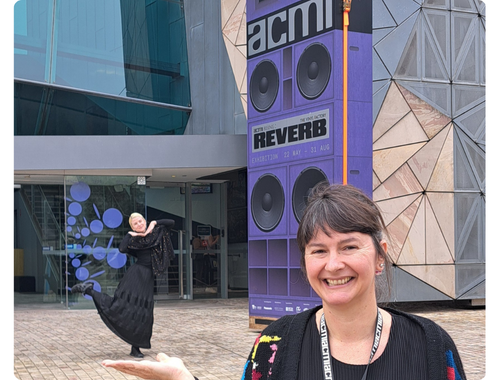
Bringing film and animation to your classroom with ACMI
Not sure how to bring film and animation to life in your classroom? Join two of ACMI’s education experts, Ellen Molloy and Nicole Goode, for a hands-on presentation covering their free online teaching resources and school excursion programs. You’ll get practical strategies and a taste of their interactive animation professional development activity. All with clear links to your school curriculum, all ready to use straight away.
*Program subject to change

Classroom of the Future MC
Victoria Spicer-Stuart,
Head of Teaching & Learning; Adoption Lead,
Beaconhills College
9.15 – 9.45am
Ian Holden, Chairman, and Jo Knight, LEGO Certified Trainer & Robotics Consultant, We Support Hands On Learning (WESHOL)


Hands-on Learning through an Explicit Lens
As classrooms evolve from teacher-led instruction to student-driven learning, the role of explicit teaching becomes more important than ever. This session explores how clear instruction and intentional modelling can powerfully support hands-on, project-based and inquiry-driven learning.
By combining explicit teaching with rich experiences, students take ownership of their learning and develop essential future skills: creativity, critical thinking, digital fluency and emotional intelligence.
When hands-on learning is supported by an explicit lens, students do not just do, they understand, reflect and grow.
10.00 – 10.30am
Adrian Lam, Gifted and Talented Education Teacher, Presbyterian Ladies College

Good Prompting is Good Teaching: Collaborating for the Future Classroom
AI is reshaping what it means to teach and learn, but teachers already have many of the skills needed to make the most of this technology. This session explores how principles of good teaching such as clarity, structure, context, and reflection are also the foundations of using AI effectively. We’ll show how educators can apply their existing pedagogical expertise to collaborate productively with AI, enhance learning, and save time. Participants will leave with practical strategies for integrating AI into their practice and preparing for the classroom of the future. Suitable for beginners through to power users, there’s something for everyone.
10.45 – 11.15am
Rebekah Sharrott, Founder & Principal Consultant, TorchWay Education

Evolving Curriculum Design: Beyond the Teacher as Hunter-Gatherer
In the rush to innovate, the ‘invisible workload’ of curriculum design often falls on individual teachers, leading to fragmented student experiences and staff exhaustion. This session argues that curriculum should not be an administrative burden, but a sophisticated piece of intellectual architecture that supports the school ecosystem.
By shifting curriculum design from a fragmented individual task to a strategic research-aligned approach, schools can guarantee consistency across classrooms and break the cycle of repetitive planning. In doing so, rigour and engagement are engineered into the curriculum itself, enabling teachers to consistently deliver high-quality lessons that improve student outcomes.
Attendees will leave with a framework for evaluating curriculum sustainability, shifting the focus from surviving the syllabus to mastering it.
11.45 – 12.15pm
Marina Azar, Founder, Mummy Safety Security Project

Future Ready, Safety First: Redefining Child Protection in Education
As founder of Mummy Safety Security Project, Marina Azar brings a unique child safety lens to the future of education. While technology, AI and innovation are transforming classrooms, one critical question remains: Are we designing future classrooms with child safety at the centre?
This session explores how schools and education providers can integrate proactive child protection strategies, risk prevention, digital safety, emergency readiness, staff awareness, and safer learning environments into tomorrow’s classrooms.
Drawing from real-world security experience, Marina challenges educators and leaders to move beyond compliance and embrace a future where safety is embedded into culture, design and daily practice.
Because the classroom of the future must also be the safest classroom ever created.
12.45 – 1.15pm
Carli Bernard, Sales Executive, IG3 Education

Enhancing Lesson Delivery with AI: Curriculum-Aligned Planning Using Wayground
This session explores how educators can use AI to improve the quality, consistency, and efficiency of lesson delivery through the Wayground platform. All attendees will receive free access via a pilot program.
Participants will learn how to generate lesson plans tailored to specific curriculum frameworks, year levels, and learning objectives using AI. The session will demonstrate how Wayground translates curriculum requirements into structured lesson sequences, including learning intentions, success criteria, differentiated activities, and assessment strategies.
Beyond basic plan generation, the session will examine how to refine and validate AI-generated content to ensure alignment with teaching intent and classroom context. This includes adapting lessons for mixed-ability classrooms, embedding formative assessment, and maintaining pedagogical integrity.
1.45 – 2.15pm
Jarrod Hill, CEO, SPORTENG

Your Field of Play: Get It Right the First Time
A well-designed, constructed and maintained field of play is more than just a surface, it’s a statement. For schools, a quality facility signals a genuine commitment to student wellbeing and athletic development, becoming one of the most visible marketing assets a campus can offer.
A properly engineered surface keeps students playing safely across all seasons: no wet weather closures, no injury risk from a failing surface, just consistent, year-round access to sport.
And getting it right the first time matters.
Learn how the correct planning and design process can provide you with assets that are fit-for-purpose all year round and can unlock opportunities for the students, teachers and the community.
2.30 – 3.00pm
June Evans-Caulfield, Senior IB World Schools Manager & Kathy Saville, Education Consultant, International Baccalaureate

Building a culture of understanding: Exploring the place of inquiry and explicit teaching in learning environments
In response to current tensions in education systems around the world, this session will support meaningful learning and highlight how inquiry processes and explicit teaching can complement each other. Participants will hear about the thinking behind both inquiry and explicit teaching. Collaborative tasks and protocols will be used to support discussion and reflection and to identify complementary opportunities for inquiry and explicit learning in the participants’ own contexts. Participants will leave with an understanding of the role of inquiry and explicit teaching in developing learners’ foundational skills and knowledge. Keeping the learner at the centre, participants will build understanding of intentional decision making in learning design, considering how and when they apply approaches to best support learners.
3.15 – 3.45pm
Sali Shayia, Managing Director, CRAMLI Psychological and Behavioural Services

Understanding and Responding to Challenging Behaviours – A Trauma-Informed Approach
An APS-approved professional development workshop focused on understanding and responding to behaviours of concern through a trauma-informed, evidence-based, and practical lens.
The training explores trauma, emotional regulation, behavioural escalation, communication, and de-escalation strategies, while supporting participants to move beyond reactive responses toward approaches centred on safety, regulation, connection, and skill development.
The workshop is guided by Sali’s Integrated Response Continuum — an overarching behavioural response and regulation framework that supports early intervention, emotional regulation, crisis response, and safe reconnection following escalation.
Designed for frontline professionals across education, disability, mental health, forensic, residential care, and community settings, the training provides practical tools and strategies that can be immediately applied within real-world environments.