
Written by Growth Coaching International.
Here’s a question worth sitting with for a moment: how would you know if you needed a coach?
Not in the abstract, “everyone is talking about coaching, maybe I should try that,” or “coaching is a good thing, generally.” I mean right now, this term, in your actual role. Would you recognise the signs?
In my experience, most school leaders wouldn’t. Not because they’re not self-aware. Often, it’s the opposite. The people who most need a coaching conversation are usually the ones so deep in the work that they’ve lost the vantage point to see it clearly. It’s just the reality of what leadership does to your field of view.
Part of the problem is that we don’t know what we don’t know. Leaders rarely wake up and think, “I should engage a coach today.” What actually happens is more subtle. A decision keeps getting deferred. A conversation with a staff member keeps getting rehearsed in your head and never quite happens. A transition into a new role feels harder than it should, and you can’t work out why. A simmering issue simmers a little longer each week.
None of these moments announce themselves as “coaching required.” They just feel like the ordinary friction of the job. And because most of us are conditioned to push through friction rather than pause and examine it, the moment for a genuinely useful conversation slides by unnoticed.
How coaching can help
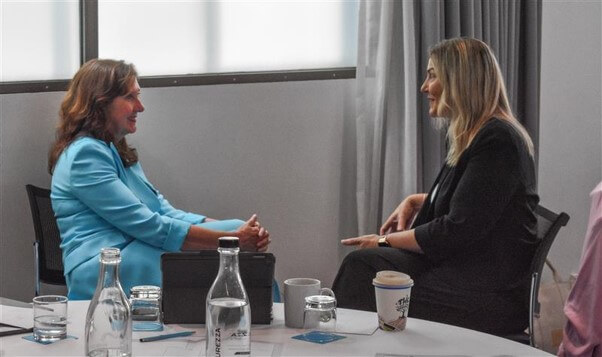
Strip away the language of professional learning for a second, and coaching is simply this: dedicated time with someone whose only agenda is helping you think more clearly about something that matters to you. A school leader once told me that her coaching time was like putting on noise-cancelling headphones; conversations with me helped filter out the “noise” and allow her to reach greater clarity and forward momentum.
Most conversations that leaders have during the working day are conversations where the other person needs something from them. A coaching conversation flips that. You are the one being listened to, the one whose thinking is being supported, the one in the driving seat.
It’s confidential. It’s impartial. And, because a skilled coach isn’t trying to manage you, direct you or evaluate you, it creates a kind of psychological safety that can be hard to find elsewhere in a school environment.
So when might it help?
Rather than a generic answer, it’s more useful to think about the kinds of moments where a coaching conversation can be transformative.
A critical moment coming up. A difficult conversation with a team member. A decision that needs to be communicated well. An interview or high-stakes meeting on the horizon. Sometimes two or three focused sessions ahead of a specific moment is all it takes to walk in with more clarity and less anxiety. As a sidenote, I’ve actually just returned from presenting at a conference in New Zealand where the school principal I coached as a demonstration wanted to make sense of a staffing issue that was playing on their mind. As our conversation unfolded, it became clear (to them) what the real issue was, how they could manage it and what they needed to do as a first small step towards resolving the issue.
A transition underway. Moving into a new role, a new level of responsibility, or even just a significant shift in what’s being asked of you. Transitions can be tricky because you are adjusting to so many new things at once while trying to demonstrate that you are the right person for the position! New duties, new expectations, new processes, new people, new environment, new culture – a lot of new! Having someone checking in on how that’s all going and providing the space to think through the challenges (and opportunities) as they present themselves can really help you manage feelings of overwhelm, and perhaps even a bit of impostor syndrome.
A pattern you want to shift. This is where longer engagements come into their own. Working across a series of sessions on how you lead, how you communicate under pressure, or how you build relationships with your team allows for something deeper than problem-solving. Sometimes this work is sharpened by bringing in a feedback tool rather than relying on your own perceptions. A DiSC profile can show you how your natural style shapes the way you communicate and lead, and where friction with different personalities on your team might be coming from. A 360-degree tool such as Genos or LSI goes a step further again, drawing on feedback from the people who work alongside you, which is really the only reliable way most of us uncover our blind spots. None of these tools do much on their own. It’s the coaching conversation that follows that supports change – making sense of what the feedback is telling you and translating it into something you genuinely do differently.
A need for perspective. Some of the most valuable coaching relationships I’ve seen aren’t tied to a specific problem or opportunity. They’re simply a standing space, perhaps once a term, where a leader steps up to what I think of as the balcony. Away from the dance floor of daily decisions, looking down at the whole pattern of the year. That distance is hard to create for yourself. A good coach helps you gain that vantage point on your work.
Simply getting on top of things. Not every coaching need is dramatic. Sometimes it’s as ordinary as feeling like you’re constantly reacting rather than leading and wanting to build a more sustainable way of managing your time, your priorities and your energy.
Give yourself permission to notice
If there’s one thing I’d want a school leader reading this to take away, it’s not “go and book a coach.” It’s simpler than that. Give yourself permission to notice the friction points and tensions. The deferred decision. The seemingly competing priorities. The conversation you’re avoiding. The sense that you’re managing rather than leading. These are not signs of failure, they are signals, and they’re exactly the kind of signals a coaching conversation is designed to help you make sense of.
Most of us wouldn’t hesitate to bring in expert support for a building issue or a compliance question. We’re strangely more reluctant to do the same for our own thinking and leadership, as though we should simply be able to work it out alone. But some of the best leaders I know are also the ones most willing to be coached. Coaching helps them to maintain the perspective needed to thrive in their roles.
If you’re at the National Education Summit this year, we’d love to talk with you about what coaching could look like for you. Whether that conversation happens with us or with someone else entirely, my hope is simply that more school leaders start noticing the moments where support like this could make a genuine difference. That noticing is, in itself, half the work.