

Written by Ian Holden and Joanne Knight, We Support Hands-On Learning.
Student disengagement, declining attendance and screen fatigue are challenges many schools are grappling with today. While classrooms have long since returned to face-to-face learning, the habits of pandemic-era teaching remain. PowerPoint presentations and video-based instruction now play a significant role in how content is delivered. As a result, students are spending more time consuming information and less time actively engaging with their learning.
At We Support Hands-On Learning, we believe students learn best when they have opportunities to understand concepts by engaging with concrete materials and hands-on experimentation. These experiences deepen understanding, improve student engagement and build the kind of skills that extend far beyond the classroom.
With explicit instruction becoming a priority focus across Australian and New Zealand education systems, some educators are questioning whether there’s still room for creativity, exploration and hands-on learning in today’s classrooms.
The reality is that explicit instruction and hands-on learning are not opposing approaches. They are complementary tools in a broader pedagogical toolbox. Used together, they can strengthen engagement, deepen understanding and help students connect knowledge with real-word application.
The power of the blend
Explicit instruction is sometimes misunderstood as rote or passive learning. In reality, it can provide students with the structured foundation they need to succeed. Through clear explanations, modelling, worked examples, guided practice and individual feedback, students build the knowledge and confidence needed to tackle new concepts and skills.
An important element of this process is scaffolding, where teachers empower students to test, experiment, build, design and extend their learning. This is where hands-on learning comes in.
When students are given the opportunity to apply their knowledge through physical engagement, the gap between theoretical knowledge and practical application begins to close. Through a multi-pronged approach, educators can establish clear learning goals while still leaving space for their students to experience surprise, motivation, ‘aha’ moments, independent thinking and self-direction and in doing so creating a more enriching, effective and enjoyable learning environment.
This is the strength of a blended approach which combines structure and creativity, guidance and exploration, explicit teaching and active application.
What does this look like in practice?
A lesson grounded in explicit instruction might begin with activating prior knowledge, establishing clear learning goals, providing explanations and worked examples, modelling skills and thinking processes. Within this framework, hands-on learning can play a meaningful role at almost every stage.
Within this framework, hands-on learning can play a role at almost every stage of the learning process.
Students might build and test solutions in a robotics challenge, collaborate on a STEM project or explore coding concepts through trial and experimentation. In mathematics, concepts such as counting, place value and fractions become easier to grasp when students can see, touch and manipulate objects.
This principle is explored in We Support Hands-On Learning’s video series developed with the Australian Association of Mathematics Teachers (AAMT), which showcases how practical learning experiences transform abstract ideas into something tangible and meaningful.
Hands-on learning can be guided, self-directed or collaborative. It can involve physical materials, digital technologies or a combination of both. The common thread is active engagement.
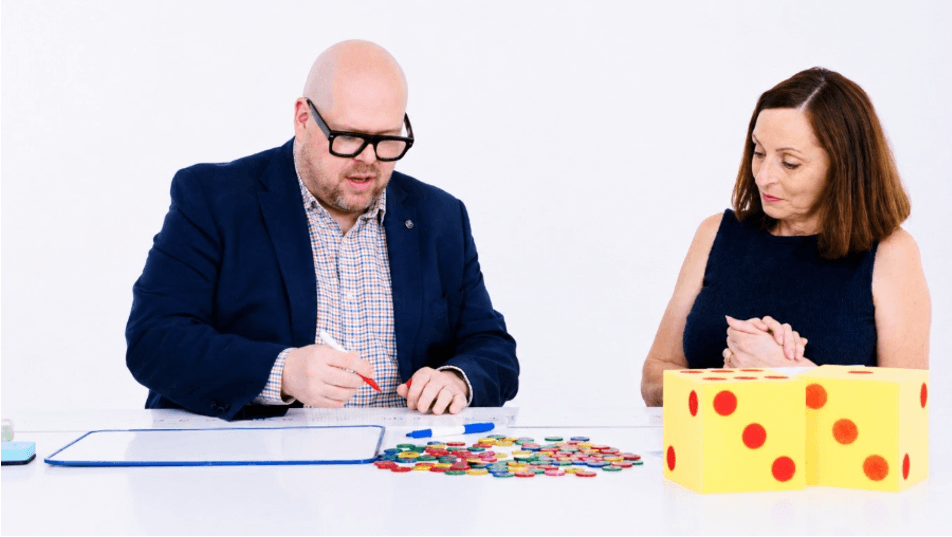
developed in partnership with We Support Hands-On Learning and Modern Teaching Aids.
Using all the tools in the toolbox
The future of education is not about choosing between explicit instruction and hands-on learning. The strongest learning environments embrace the best of both.
Great teaching has never relied on a single approach. It draws on a diverse teaching and learning toolkit, using the right strategy at the right time to meet the needs of learners.
As we prepare students for an increasingly complex world, we must continue to create opportunities for them to engage with the tactile, the tangible and the transformative. When students are given the chance to apply their learning through rich, hands-on experiences, they don’t just remember concepts; they understand them, connect them and carry them forward.
If student mastery, quality teaching and strong learning outcomes are the goals, then incorporating more hands-on learning within an explicit framework is a step toward a more balanced, future-ready education system.